davegee
-
Posts
9,363 -
Joined
-
Days Won
60
Everything posted by davegee
-
Just checked wnsoft site & I think only 5.6 is for sale? True, but that doesn't stop someone who didn't know different from downloading the Beta version with its bugs as a trial. It's the only version available on the forum page. DaveG
-
Peter, Firstly, I wonder if IGOR could be persuaded to include information on obtaining and loading basic and VideoBuilder keys in all downloads as "readme"'s? That could be the answer to this continually arising "problem". He already puts "what's new" in the package. Secondly, I wonder how many "new users" would download, for instance 5.7.3 not realising which, by its very nature, contains bugs wheras they SHOULD be downloading 5.6, the last full working version? DaveG
-
"We shouldn't start important projects with v5.7 beta#n but only test the new features". Exactly. DaveG
-
I have a (very) vague memory of this approach being used to "reset" codes on car radios a long time ago. DaveG
-
I have also noticed that animations created in 5.6 do not always translate into 5.7.3. Objects become displaced and it seems that it might be necessary to start again. DaveG
-
I agree, once again. Image editing software is for editing images. Audio editing software is for editing Audio. PTE is for combining edited images and edited audio. DaveG
-
Confused - HD Video vs DVD Video Disc
davegee replied to [email protected]'s topic in General Discussion
If you have the HD TV (check the manual to make sure it is 1920x1080) then you can make your shows at that res and play the EXE via a connection between your PC/Laptop and the HD TV. This gives the highest quality. The prefered method of connection for highest quality is an HDMI cable (or DVI plus Audio Lead). The only limitation is your PC/Laptop - if it plays OK on the computer it will play on the TV. It is a simple progression from there to HD Projection at the same resolution. I have been using this method for around two years and until BluRay Recorders come my way I will continue to do so. DaveG -
One small step for Igor............................ Congrats!! DaveG
-
HI dom, I downloaded latest version (did not try early versions). Smoother than silk! - absolutely no issues. Details: Dual Core 3GHz with 2Gb RAM nVidia 7600GS card with 512Mb RAM. 1920x1200 Monitor with HDMI connection. NO anti-virus; NO firewall; NO internet connection. It would be interesting to try earlier versions - are they still available? DaveG
-
Let me add my congratulations to Igor and all who have worked on PTE since Ver 1. I joined in early in V4 and have never looked back (or elsewhere). Thanks Igor. DaveG
-
16:9 laptop & TV - what image size & resolution?
davegee replied to Photofanatic's topic in Equipment & Software
No, DVD will always give you the results that you have seen. Use 1024x768 high quality images and don't worry about their resolution (ppi) - that's only applicable to printing. For best quality, I repeat: Connect laptop to TV (preferably via HDMI/DVI). Use 1920x1080 images in a 1920x1080 fullscreen show. Check your TV settings - sometimes there is a colour/contrast/brightness setting specifically for computer - don't use "vivid". DaveG -
16:9 laptop & TV - what image size & resolution?
davegee replied to Photofanatic's topic in Equipment & Software
Connect laptop to TV (preferably via HDMI/DVI). Use 1920x1080 images in a 1920x1080 fullscreen show. Check your TV settings - sometimes there is a colour/contrast/brightness setting specifically for computer - don't use "vivid". DaveG -
Possibly, the easiest way is to use your normal DVD copying software to copy the original. Alternatively an ISO file allows you to burn multiple copies without having to go thro' the lengthy process again. In my case double clicking on an ISO file brings up the appropriate burning module in ROXIO 8. DaveG
-
Eric, Regarding screen size and resolution matters: It seems that the maximum resolution available in a 19” wide screen monitor (16:10) with DVI is 1440x900 (AG Neovo). The may be higher resolutions but a quick search failed to find any. In a 4:3 monitor the resolution seems to max out at 1024 pixels high.. Again a quick search failed to find bigger in an LCD config. NEC have a typical 19” DVI 1280x1024. If, as you state, you want to maintain your 3:2 AR then you are faced with one of the following alternatives. The widescreen option (1440x900) will allow you to make and view approx 1350x900 (or bigger) shows. When using higher resolution images for your show they would be compressed to 900 high to fit the height of the screen (with 45 pixel black bands at each of the sides). The 4:3 option 1280x1024 would allow for 3:2 shows of approx 1280x853 or bigger shows (there is no exact 1280 wide 3:2 translation). When using higher resolution images for your show they would be compressed to 1280 wide to fit the width of the screen (with 25 pixel black bands at the top and bottom). I have assumed that you want the best quality in terms of connections (DVI) in each case and that you will be catering for this in the design of your “cube”. DaveG
-
Regarding price: Closest in Size (to mine): http://www.dabs.com/products/iiyama-24--e2...0000-4294955021 Closest in Price (to mine): http://www.dabs.com/category/peripherals,d...428540000-50677 When I bought (24" - 1920x1200) there did not appear to be a 1920x1080 version for less than around £600 - £1000. They seem to be filtering through in the lower price range now. If I were buying again I think I would go for 1920x1080 (purely to avoid the black lines when viewing 1920x1080 shows). DaveG
-
Eric, I know that you have said that you are using 1024x768 projectors and, presumably, are making your shows at 1024x768. However, if it is your intention to make shows in HD format i.e. 1920x1080 then it is imperative (IN MY OPINION) that you are able to preview them at that resolution. Incidentally, it used to be the case that you could not make a PTE show that was bigger than your screen resolution. I wonder if that has changed? Therefore you need a 1920X1080 (or a 1920x1200) monitor in order to do this. I have said this many times here: Make sure that, if your computer has HDMI or DVI connections, that you use it. If you are buying a new computer make sure that your new computer's graphics card has HDMI or DVI output. I use an Iiyama Pro-Lite 82403WS and have used Iiyama for the last couple of monitors with absolutely no problems whatsoever. I THINK, but I'm not 100% sure, that the "ghosting" that Lin mentioned COULD be a function of using an LCD monitor connected via VGA connection. I have noticed similar effects when doing trials early on. DaveG
-
I think that you change the Mask.jpg in PROPERTIES and have to change its NAME in the COMMON tab? DaveG
-
VideoBuilder burn errors and project size
davegee replied to Ed Overstreet's topic in General Discussion
Ed, Video Builder has the option to burn an ISO file to the HD. This info may be completely useless to you but my method of working has always been to burn the ISO file to the HD and then, knowing that a successful ISO file has been created, I double click on the ISO file to open the appropriate module (in ROXIO or whateveter you use) to burn to DVD. Notwithstanding your temp file problem, I would still use the create ISO file method because, if the ISO file cannot be created, then there is no point in putting a DVD in your drive. DaveG -
VideoBuilder burn errors and project size
davegee replied to Ed Overstreet's topic in General Discussion
Ed, Have you tried burning an ISO file to your HDD first? DaveG -
Suggestion: Provide more music file information...
davegee replied to goddi's topic in Suggestions for Next Versions
"(Typically, I use photo files of 300 - 500 mb, and occasionally larger for zooms, etc.)" What camera are you using for those? DaveG -
Igor, Thanks for the explanations - it makes sense. There are other ways of doing the same things so, no problem. DaveG
-
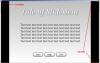
"It is not a bug. Same behaviour exists when you are setting width/height for a windowed slideshow. We assign width/height for internal client area of a startup window, excluding border and caption of this window. If we will set width/height for whole window (with border and caption) it will cause serious problem - appearing of black strips arround slide - because thickness of caption and border of a window are different on each PC depending on version of Windows and used graphical theme (Classical, XP, Aero). If you need to have fullscreen startup window please consider using of first slide as some kind of a startup window?" OK to that - but the Startup Window fits to the HEIGHT of my 1920x1200 screen with a gap at each side. See screen shot. Regarding the "flash" - if I start a Preview from a Project it flashes to the Project screen. DaveG
-
GGARD, You could try installing 5.7.2 and trying that (save project as DIFFERENT NAME IN 5.7.2!). If it is still the same, post a query to Igor in the 5.7 thread - explain the problem and that it also happens to you in 5.6. DaveG
-
Jandis, My suggestion is to not make DVDs. If you MUST make DVDs then the loss of quality is inevitable. The OPTIMUM resolution is the NATIVE RESOLUTION of your computer monitor. Then connect your computer/laptop to your TV (preferably via HDMI or DVI as Ken indicated). DaveG
-
Igor, Bug in startup window? Entering 1920x1200 produces a startup window which is roughly 1860x1200. I have to enter 1960x1200 to get window to fill 1920 width of screen. DaveG P.S. It is also annoying that the desktop flashes between startup window and preview start. Can anything be done about this? P.P.S 5.6 show now opens correctly with screen options recognised.