

Igor
-
Posts
13,619 -
Joined
-
Last visited
-
Days Won
268
Posts posted by Igor
-
-
Updated version of PTE AV Studio 12.0.2 is available for PC and Mac
Download: https://www.wnsoft.com/pte-av-studio/download/
Or use the Auto Update function: Main menu > Help > Check for Free Updates
- Fixed an issue where editing or changing a previously assigned custom transition on a slide would incorrectly select that transition on the "Transitions" tab in Project Options.
- Fixed an issue with cursor position when clicking into the top-left corner of an empty text box before typing the first character.
- Fixed an issue with a text comment displaying a video file name on a slide using a text template.
About window shows: 12.0.2 Build 1.
-
 1
1
-
Great! We'll release the official version 12.0.2 soon.
-
On 7/17/2026 at 12:44 PM, Roan Jon said:
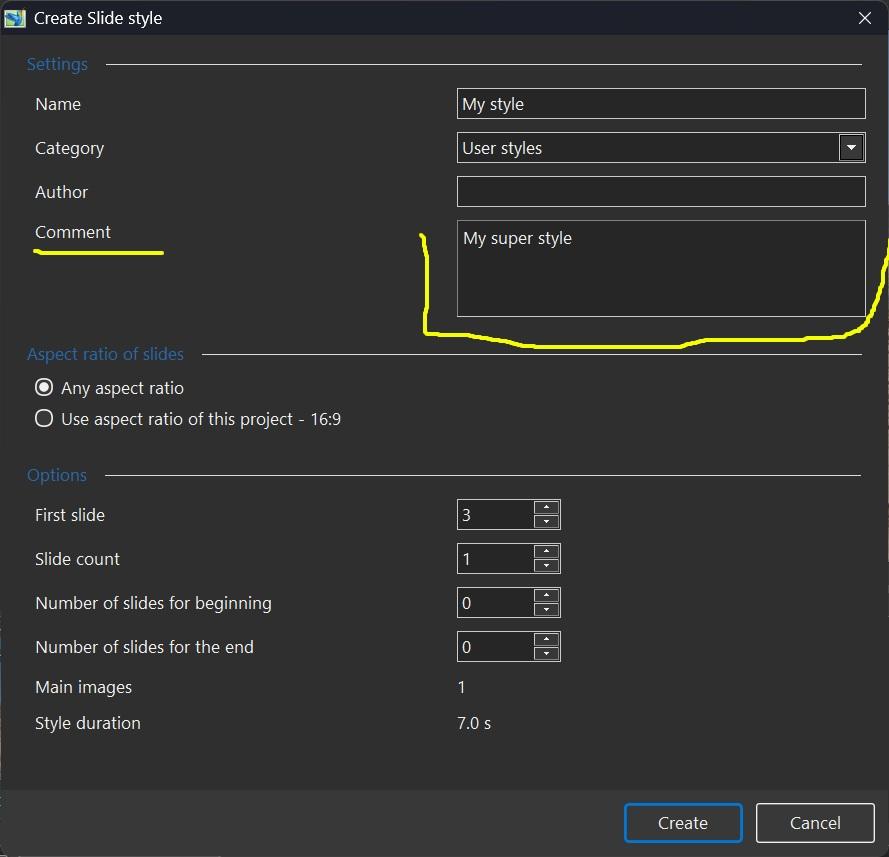
When I create a style and want to add text to the comment box (if the box is empty), the cursor doesn't move when I type the first letter.
Roan,
Try the new version 12.0.1 Build 4:
-
Thank you! I've reproduced this issue. We'll fix it.
-
Hi Ian,
Thanks for sharing! It's great to see the story of cosmonaut Gagarin in AV. An unusual experiment using Ai content.
-
Roan, I need to think, I'll take a break until Monday.
If it possible, please record a screen video how you type words in a text box.
-
Roan,
Could you check a couple of things on the problem PC:
1. Which exact keyboard layout is set for French? Windows offers a few variants (e.g. "French", "French (Belgium)", "French (Canada)" or "French (Switzerland)") - please check under Settings > Time & Language > Language & Region, or Control Panel > Language, and me us know the exact name.
2. Do you have any additional software installed that hooks into keyboard input? For example, keyboard remapping tools, macro utilities, clipboard managers, or specialized input software.P.S. Denis, thanks for your comment!
-
Thanks for these details!
Can you switch to the English keyboard layout and type English words, for example "Hello"?
-
Hi,
PTE AV Studio 12.0.2 Beta is available:
- Fixed an issue where editing or changing a previously assigned custom transition on a slide would incorrectly select that transition on the "Transitions" tab in Project Options.
- Fixed an issue with a text comment displaying a video file name on a slide using a text template.
Download for PC: https://files.wnsoft.com/test/pteavstudio-setup.exe
Download for Mac: https://files.wnsoft.com/test/PTE-AV-Studio.dmg
The About window shows v12.0.1 Build 3.
-
Interesting problem.
1. If you have V11.0.21, could you check it there?Now about V12.
2. Let's try to figure out if this problem occurs with any text or specific letters or words.
Try typing: Hello, world
Then try typing in French. Try typing different French words. If some work, but others don't, give me exact examples. For example:
Merci - doesn't work (won't print any symbol)
Bonjour - works
Hello, world - works
2. Check another text field (box) in the Objects and animation editor.
Add a new Text object, and in the Properties tab, try typing text in the text box. Same words. -
Hi Roan,
Do you mean the Comment box field, as shown in the screenshot below? It works for me.
Does the vertical cursor line blink when you click inside an empty text field?
Can you paste some text from Windows Clipboard (Ctrl+V)?
Do you see a popup menu on the right mouse click? With commands Undo, Redoe, Copy, Paste, etc.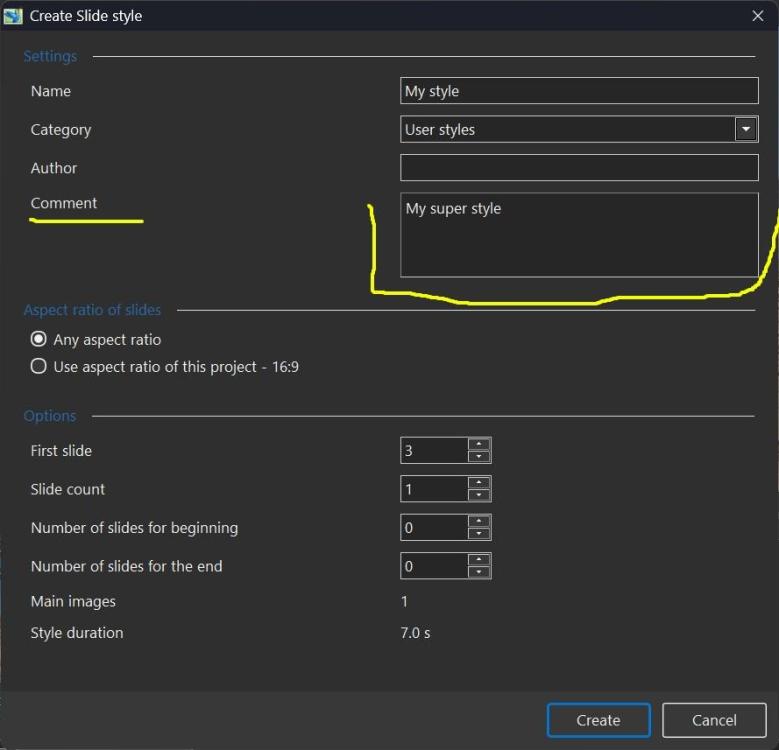
-
Roan, thanks for the confirmation!
-
Please can you translate your message to English (Google Translate, DeepL, ChatGPT) and tell in more details.
-
6 hours ago, Roan Jon said:
When I check the "Transitions" project option again, the custom transition I had modified is selected.
Even if I uncheck it, it remains selected.
We fixed this issue.
Try the new v12.0.1 Build 3:
-
1
-
-
Hi Roan,
Thanks for your message! I confirm this issue, we're already working on the solution.
-
1
-
-
Thanks for confirmation!
By the way, there was a funny error in the code. Instead of cutting out the file name, it cut out the beginning of the file path, and the letters were mixed up. That's why you saw "sresU" > "Users" – the beginning of the file path on macOS.
-
Tom,
Please try the updated v12.0.1 Build 2:
https://files.wnsoft.com/test/pteavstudio-setup.exe
https://files.wnsoft.com/test/PTE-AV-Studio.dmg
It includes only one fix for this issue.
-
Tom,
I reproduced this issue with a text comment and main video object. Thanks!
-
Hi Tom,
Sorry, I missed your initial post in the Beta section!
Please send me a small test project (ZIP archive with a .pte file and 1 image).I've already tested it on my Macbook Air M3 and also Windows 11 PC - everything is OK there. I suspect the problem is related to some specific characters in the full file path, I'll need to check this.
-
Hi Kieron,
Did you clear the cache of audio clips in the Preferences window (main menu > Settings > Preferences)?
We didn't touch this code (waveforms for audio clips) in V12. Please let me know if this problem will occur again.
I'm glad that you like the new V12!
By the way, ZIP archive creation is also several times faster than before.
-
 1
1
-
-
Hi Kieron,
The program was unable to read the audio files, or the cache file was corrupted.
Could you tell me what antivirus software you're using? It may be creating a delay when opening the audio file, causing PTE AV Studio to determine that the file is unreadable.
The second possible cause is that the audio files are located on an external network storage device. A similar cause is a delay in opening/reading the file. -
4 hours ago, nelson said:
The first link new feature will not open, maybe an issue at my end?
Kieron, thanks, I've updated the link. Try again.
-
1
-
-
Hi Rosemary,
Please read the 11 mini tutorials for all the new major features in PTE AV Studio 12:
Every publication tells about a new feature, includes screenshots or a video demonstration, and sample projects:
https://www.pteavstudio.com/forums/tags/new feature/2. The online help has updated articles for new features:
https://docs.pteavstudio.com/en-us/12.0/v12_wn/main3. Also read the What's New page on our website:
https://www.wnsoft.com/en/pte-av-studio/whats-new-12/
It tells about new features and includes screenshots and video demonstrations.-
1
-
-
Updated version of PTE AV Studio 12.0.1 is available for PC and Mac
Download: https://www.wnsoft.com/pte-av-studio/download/
- Fixed an issue where some slide styles could not be applied to slides.
- Fixed the video file extension not updating correctly in the Save File dialog after changing the export format (between MP4 and AV1).
About window shows: 12.0.1 Build 1.
-
1
HELP! No Sound in PTEAV Nevermind [SOLVED]
in Troubleshooting
Posted
Hi,
I'm glad you resolved this technical issue. PTE AV Studio uses the default audio device (configured in Windows settings). In other words, it's the same audio device used by your browser (YouTube) or VLC video player.
Usually, restarting the program (PTE AV Studio) is sufficient if you've changed the audio output device. In rare cases, restarting your computer (Windows) may be necessary.