davegee
-
Posts
9,363 -
Joined
-
Days Won
60
Everything posted by davegee
-
Phil, If you are using "CREATE / AVI Video File / Create Custom AVI" then you need to choose a video CODEC other than the PTE Codec. A little trial and error is sometimes required to find the right one. Alternatively you could try "Creating HD Video" choose your presets to suit the size of your show and you will have a "better" result which you can play on your PC (or MAC) in MPEG4 format. Igor recommends EITHER Quicktime or Media Player Classic Homecinema for playback. If you want to persevere with the AVI then please post the steps you are taking in detail along with the resolution/aspect ratio etc for your show. DG
-
I'm not sure of the OPs motive for asking this question but it does bring to mind a point of ettiquette that I posted a LONG time ago. If all authors were to include in the "title slide" preamble the full details of the show about to be seen it would perhaps help the viewer. DG
-
Hi Lin, I fail to understand why transporting a large screen TV in your part of the world is any different from transporting a large screen TV in my part of the world? On the other issue, and to cut a long story short, if you have never compared a 16:9 image reduced to 1024x576 (projected on a 1024x768 projector) with the same image reduced to 1920x1080 (projected on a 1920x1080 projector) and projected at the same PHYSICAL dimensions then I wouldn't expect you to understand. DG
-
Hi Lin, I think that what I was refering to has been covered elsewhere. I was certainly impressed by your demo but the lady's reply underlined the fact that any demo which is broadcast to a wider audience of (possible) non users of PTE should, as well as showing the bells and whistles, show that PTE works very well and better than most at the basics. There was, in fact a second reply to my post - did you read that? http://www.nikoncafe.com/vforums/showpost.php?p=2814885&postcount=4 DG.
-
Settings for Creating 'HD-Video' and 'DVD-Video'
davegee replied to goddi's topic in General Discussion
Hi Gary, See the attachment to this FAQ post. http://www.picturestoexe.com/forums/index.php?showtopic=10609 DG -
Hi Lin, When we were buying a new projector the dilema was that the manufacturers were OBVIOUSLY catering for HD presentation of various sources which did NOT include camera clubs or AV clubs. So our choice was driven by what was available and which format would best present a 3:2 image. The choice came down to a 4:3 1400x1050 or a 16:9 1920x1080. For 4:3 images there is not a lot of difference but for any image between 4:3 and 16:9 the difference in thepixel count increases with the aspect ratio. (The image gets smaller in the 4:3 frame and bigger in the 16:9 frame). Since, in our situation, we were looking to increase QUALITY as well as resolution it was "no contest". 4:3 image on a 1400x1050 projector= 1470000 pixels 4:3 image on a 1920x1080 projector= 1555200 pixels Not a lot of difference. 16:9 image on a 1400x1050 projector= 1102500 pixels 16:9 image on a 1920x1080 projector= 2073600 pixels That's twice the number of pixels being thrown at the screen for the same image. You cannot compare a 16:9 image sized for 1400x1050 with a 16:9 image sized for 1920x1080 (quality wise). You spoke of "throwing away" portions of images - what about the amount of resolution being thrown away when sizing for smaller projectors? No amount of sharpening can recover the lost resolution. Even if you use full camera res in your PTE show then it is interpolated down by PTE or your graphics card etc. In a 1920x1080 show presented on a 1920x1080 laptop shown through a 1920x1080 projector there is NO interpolation taking place. No one FORCES anyone to use the FULL 16:9 area of the projector but it's there if required for panoramics and if the widest image in a competition is, for instance, 3:2 then the width of the screen can be filled with a 3:2 image. BTW - PTE is our chosen tool for presentation of images in competition. Your suggestion of transporting a large TV on a weekly basis is, let's face it, unrealistic. DG
-
Hi Lin, I should have mentioned Olympus and you are correct. But I did a demo of aspect ratio / resolution for my own club and as a build I did a poll of the types of cameras being used. Out of 100 or so members present there was one person using a pointand shot (bridge) camera and 99 or so persons using 3:2 DSLRs. No one was using Olympus. I can't imagine 100 plus people huddling around a TV monitor of any description or size and even if there was one big enough we would have no place to store it from one Thursday to the next. DG
-
Apologies, the figure should have been 699,050 (1024x683) for a 3:2 in 1024x768. I was thinking of your mention of 4:3 and 3:2 and DSLRs. You either have to crop the DSLR image to suit the 4:3 and waste original pixels or fit the DSLR image to the 1024x768 frame with black bands. In 1920x1080 the DSLR fits the height and NOT the width - it makes a big difference. 1024x683 vs 1620x1080. We DO use projectors and we HAVE done the comparison. DG
-
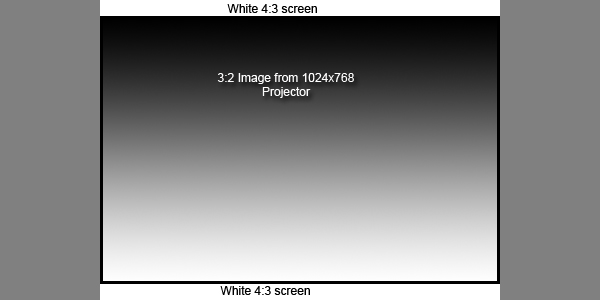
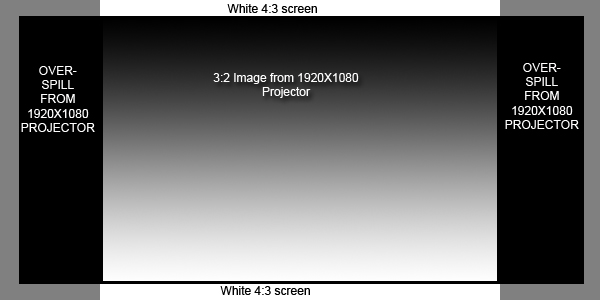
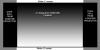
In reply to Lin's comments above: Please consider the 2 configurations below which represent a 3:2 image being projected onto the same screen at the same physical size by firstly a 1024x768 projector and secondly by a 1920x768 projector. The end result is exactly the same when you consider ONLY the image size on screen. BUT, consider this: The 1024x768 projector is throwing 699,050 pixels at the screen (3:2 image fit to a 1024x768 frame) while the 1920x1080 projector is throwing 1,749,600 pixels at the screen (3:2 image fit to a 1080 high frame). If you have never compared the results obtained this way I suggest that a rethink might be in order. DG

-
My point is that care needs to be taken about HOW PTE is presented to the non-users? DG
-
The link posted at Nikon Cafe got just one very interesting reply. Hardly anything to go by but interesting nevertheless and worth consideration: http://www.nikoncafe.com/vforums/showthread.php?p=2813485#post2813485 DG
-
Peter, When it filled the screen in PC mode it was being upscaled from 1024 high to 1080 high. That's not a lot but interpolation nevertheless. When HDMI is used and correctly matched to your 1080 high TV (acting as a monitor) the show would play at "actual pixels" because the "fixed size of slide" was ticked. DG
-
Peter, A possible answer to the HDMI "problem" is that you did not build your show at 1080 high and had the "fixed size of slide " ticked. HDMI and VGA inputs will treat this differently. DG
-
Nice one Lin! I have posted a link on the Nikon Cafe web site. The question of "which software" crops up there from time to time. DG P.S. Also liked the Atkins tracks - haven't heard those in a while.
-
...... for me this had more impact, yet we are only talking about size. It's not just about size - think about it. DG
-
Hi Mark, Just to prove that you cannot please all. The 16:9 version (without line) plays nicely in the width of my 16:10 monitor with black bands top and bottom into which any black object will bleed. To me the THIN white or gray line around the 16:9 show would prevent that. I have spent a lot of time figuring this and my view is that, to make your show appear as good as possible on ALL monitor aspect ratios, that little line is essential! From THIS point of view I prefered the original. DG
-
[3D Transformation] Need explanations about "Z position"
davegee replied to thedom's topic in General Discussion
Umberto, To most of us all of this is meaningless without an example? DG -
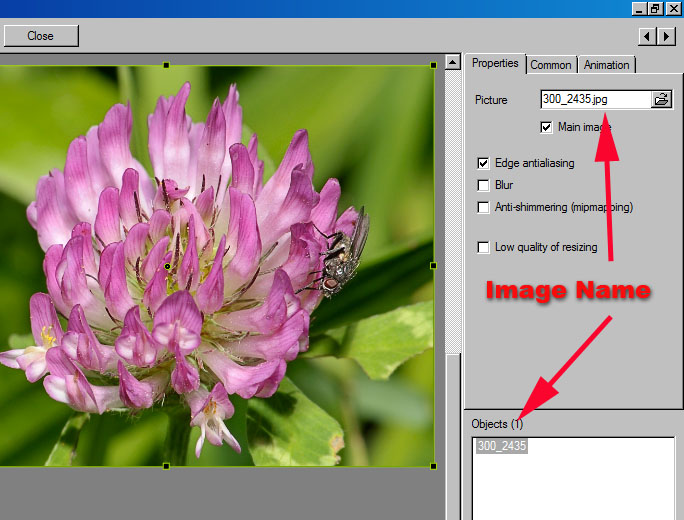
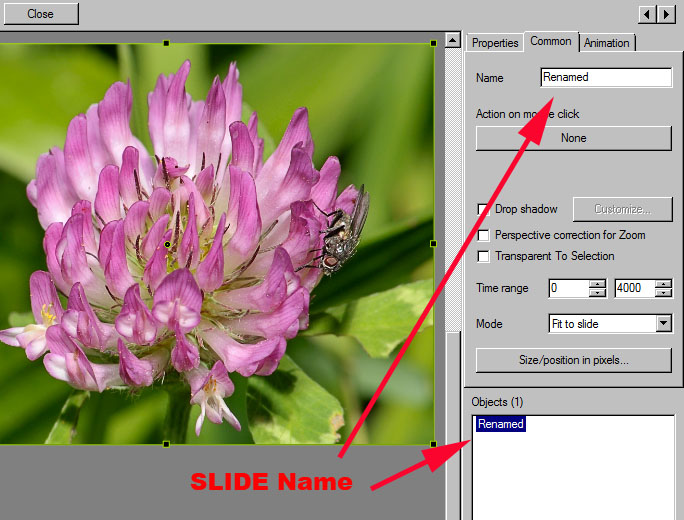
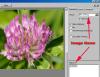
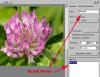
I wish to have the facility to change the names of slides (without affecting the names of any picture files): Ernest, Let's try it with pictures - maybe we will get a better understanding. First picture (PROPERTIES) shows IMAGE NAME. Second picture (COMMON) shows SLIDE NAME and refers to MAIN IMAGE. (The name in PROPERTIES remains unchanged) Using these pictures can you describe what you want? DG
-
Ernest, See my post above!
-
Ernest, Where is "Rename File" situated - I have not come across this? Another way of doing it is to change the name in COMMON TAB of O&A to something recognisable. This does not alter the original name of the file. While the NAME in COMMON (and the OBJECTS PANE) would show REDFLOWER the original file name (e.g. 300_dsc_1234) would be maintained in the PROPERTIES tab. Generally speaking I am totally against renaming files under any circumstances. Any filing system needs the original file name in some form to maintain a chronological filing sequence. DG
-
Stab in the dark: In a mirroring situation your PTE is going to the VGA output. When connected via DVI/HDMI only your desktop is going to the TV while the PTE is STILL going to the VGA. If you are able to connect a second monitor to the VGA while also connecting to the TV via DVI/HDMI the second monitor will POSSIBLY be showing the PTE. DG
-
Peter, My post above: "Strange Peter, Do you have any sort of Dual Monitor arrangement for the MAC which might be causing a problem? DG" On a PC it's Dual Monitor - on a MAC it's Mirroring. DG
-
.....and I didn't get an alert to your reply. DG
-
Peter, I think it means that unless you are using a HDMI connection you won't get 1920x1080. I'm not sure that a DVI-HDMI converter is the same thing - maybe someone else (who has tried it)? But I don't see how this would result in your problem - do you normally run your MAC to a separate monitor? DG
-
Question for someone with Photoshop CS4 Extended
davegee replied to Lin Evans's topic in Equipment & Software
"Other than convenience, I have no complaints about the RAW converters for my cameras from the manufacturers" I'm afraid that I look at things from a different perspective - if the conversion from the manufacturer's product gives a better result (as it should do for all cameras) then it is no contest. I look for quality - not convenience - but we are all different and each to his own. ACR you press a button after conversion and it sends the image to CS4 - mine does exactly the same thing in the same amount of time. ADOBE MEDIA PLAYER - I did default installations on both my machines (at least I thought I did!) but cannot find Adobe Media Player anywhere. DG